Open-source Herd-like local PHP development environment, packaged for Debian/Ubuntu and published to the
ppa:lerd/lerdLaunchpad PPA.






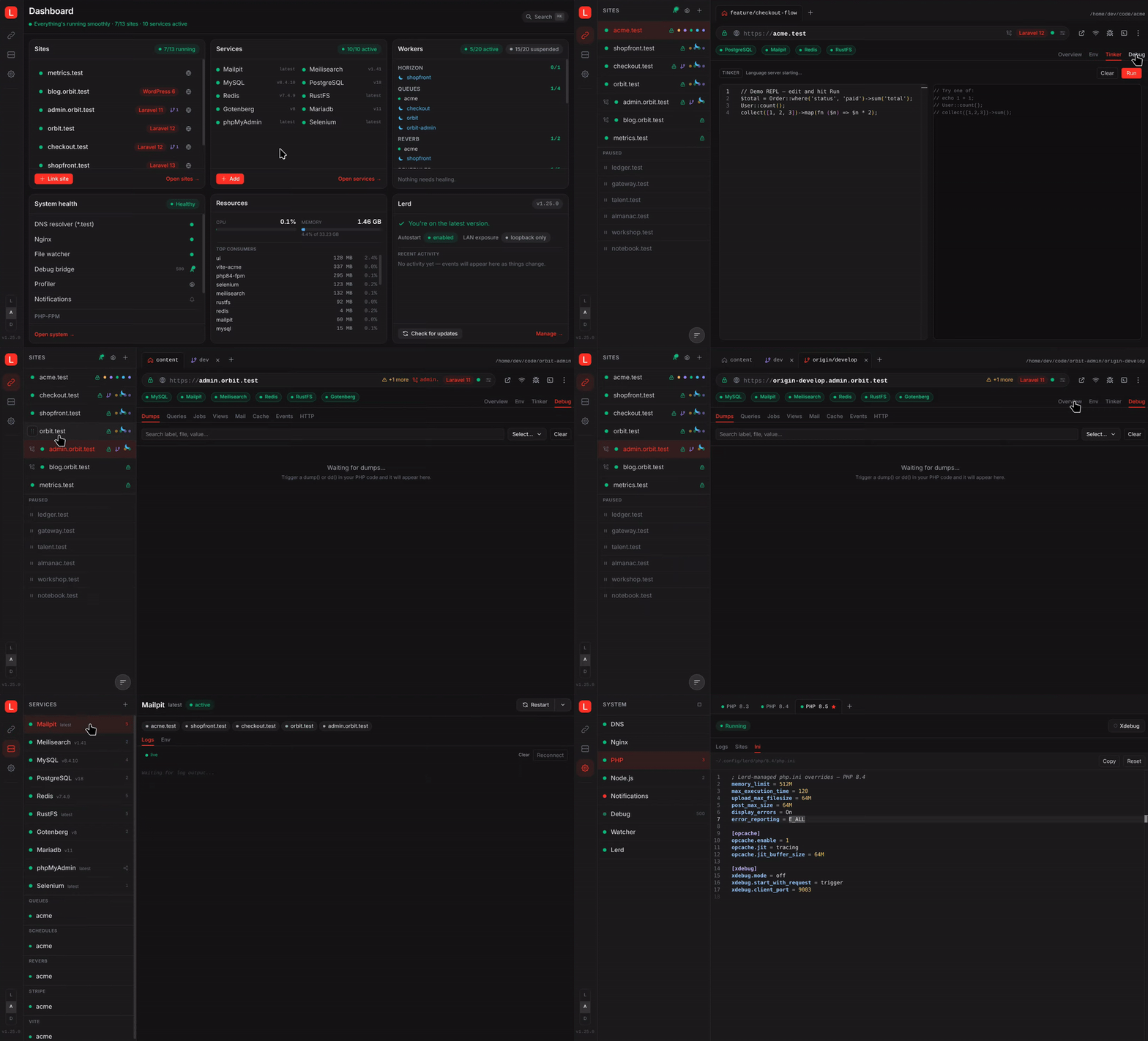
Lerd runs Nginx, PHP-FPM, and your services as rootless
Podman containers: automatic .test domains with HTTPS,
per-project PHP versions, one-click databases and services, a built-in web UI,
TUI, CLI and MCP server. No Docker, no sudo, no system pollution. This repo
makes it a first-class Ubuntu citizen: apt install lerd brings up the whole
stack on its own, and every update after that arrives with your normal system
updates.
The PPA carries packages for every Ubuntu release in standard support and for
the current development release (the SERIES list in scripts/common.sh).
On one of those:
sudo add-apt-repository ppa:lerd/lerd
sudo apt update
sudo apt install lerd
lerd install
On any other release, add-apt-repository leaves behind a source entry that
fails every later apt update, because the PPA has nothing published for that
series. If that has already happened, remove it with
sudo add-apt-repository --remove ppa:lerd/lerd. Either way, use the
script installer instead:
curl -fsSL https://lerd.sh/install.sh | bashUpdates arrive through apt like any other package:
sudo apt upgradeLaunchpad PPAs build from signed source packages, not prebuilt binaries. lerd
needs a very recent Go toolchain and a network-fetched Svelte UI, neither of which
the network-isolated Launchpad build farm can provide. So this repo does not build
lerd from source. Instead it repackages the binaries already published on each
upstream release: the source tarball
ships the prebuilt lerd (and lerd-tray on amd64), and debian/rules installs
the one matching the architecture Launchpad is building for.
The package uses the 3.0 (native) source format so the prebuilt binaries can live
in the source tarball without a separate orig tarball. Each upstream version is
uploaded once per Ubuntu series with a ~series version suffix (for example
1.29.0~noble1).
.github/workflows/publish.yml polls the upstream repo daily. When a new release
appears it builds signed source packages and dputs them to the PPA, then records
the version in published-version. Manual runs are limited to repo admins.
.github/workflows/ci.yml builds a binary .deb on every push and asserts it
installs /usr/bin/lerd.
The publishing workflow needs an OpenPGP key that is registered on the Launchpad account that owns the PPA:
GPG_PRIVATE_KEYsecret: the ASCII-armored private key used to sign uploads.- The matching public key added at
launchpad.net/~<account>/+editpgpkeys, and its email confirmed on the account.
Enable the arm64 processor in the PPA settings if you want arm64 builds.
sudo apt install devscripts debhelper dput
# dry run, unsigned source build:
scripts/build-source.sh 1.29.0
# build a binary .deb and check it installs the binary:
scripts/build-binary.sh 1.29.0
# real signed upload:
GPG_KEY_ID=<your-key-id> scripts/publish.sh 1.29.0