


A UI demo for the Open-Meteo Weather Map Layer — a MapLibre/Mapbox GL JS weather layer powered by Open-Meteo OMfiles.
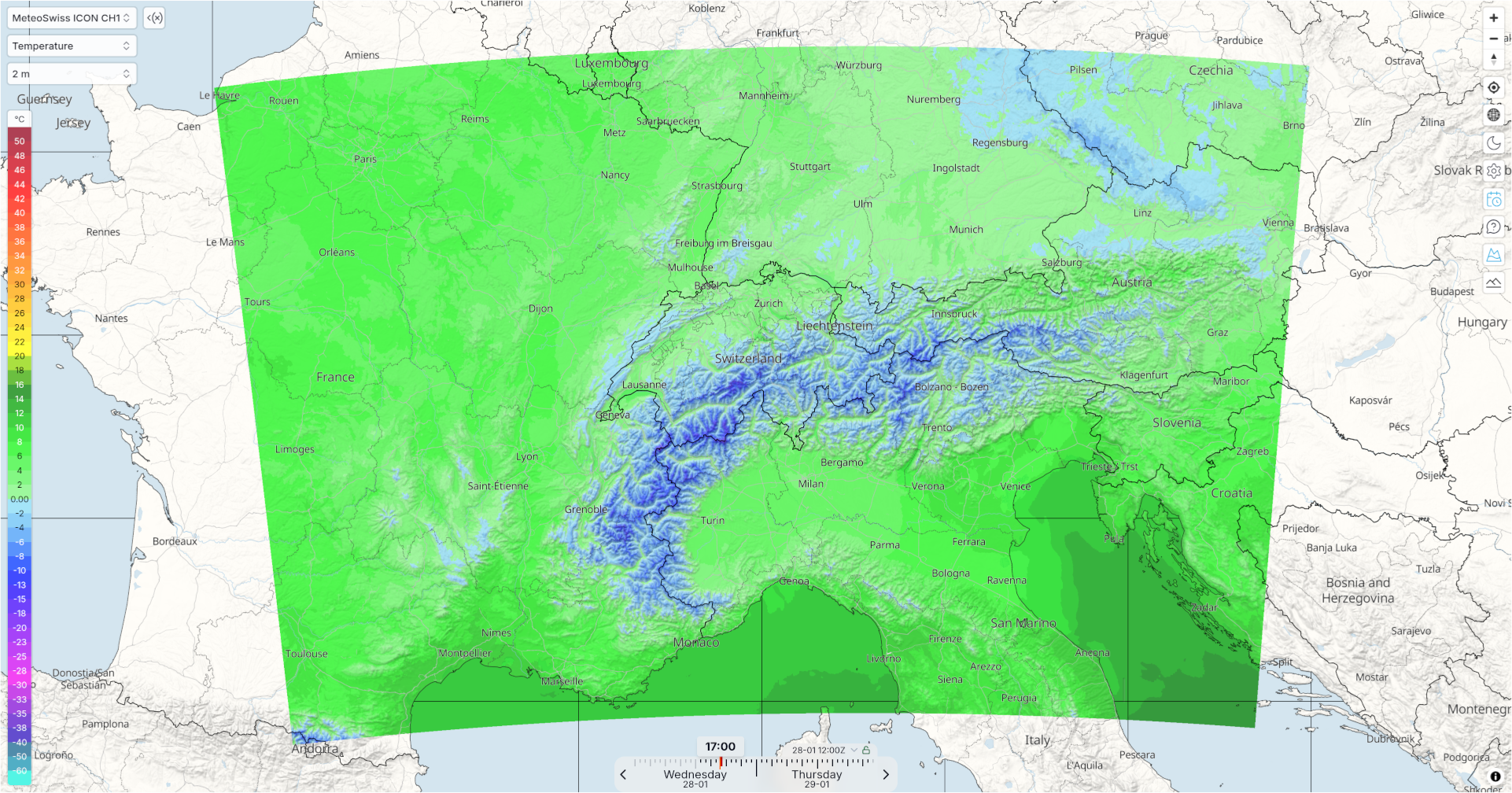
This is a client-side app that fetches OMfiles from data-spatial.open-meteo.com and renders them with MapLibre GL. Weather tiles are fully rendered in the browser at the native model resolution — no server-side tile rendering required.
Looking for the Open-Meteo API? See open-meteo/open-meteo.
Requires Node LTS (see .nvmrc).
npm install
npm run dev
Build for production:
npm run build
npm run preview
Run checks:
npm test          # vitest unit tests
npm run check     # svelte-check
npm run lint # prettier + eslintThe app fetches OMfiles from data-spatial.open-meteo.com by default. Set VITE_DATA_BASE_URI (e.g. in .env.local) to point a build at a local or staging data_spatial endpoint.
The data_spatial tree is served from two places:
https://openmeteo.s3.amazonaws.com/data_spatial/...is the AWS S3 origin. Public and uncached, with a browsable index at openmeteo.s3.amazonaws.com. This is the endpoint used by the weather-map-layer README and examples.https://data-spatial.open-meteo.com/data_spatial/...is the endpoint this app uses. It only accepts requests with alocalhostor*.open-meteo.comreferer.
The weather-map-layer renders through SharedArrayBuffer, which needs cross-origin isolation. The dev and preview servers send the required COOP/COEP headers via a plugin in vite.config.ts; in production the same headers come from static/_headers (Cloudflare Pages). If these headers are ever dropped, the app still works but falls back to a slower path that copies data to every worker.
package.json pins @openmeteo/weather-map-layer to a git commit. To develop against a local checkout, link it:
cd ../weather-map-layer && npm link && npm run build
cd ../maps && npm link @openmeteo/weather-map-layer
The package resolves through its dist/ build, so rebuild the weather-map-layer after changes to see them in the app.
- Open issues and PRs in this repository for UI/demo-related changes.
- For issues with the weather map layer itself, see the weather-map-layer issues.